Traditional Art & Digital Art : Intention at the heart of Creation
The scratch of a pencil on paper, the smell of freshly applied acrylic paint, the texture of a drawing sheet, or the relief of a canvas. For many, these sensations are intimately linked to the act of creation.
Conversely, digital art often evokes images of graphics tablets, high-definition screens, drawing software, or workstations where complex illustrations are born. Two worlds that are sometimes presented as opposing forces, as if one had to replace the other.
Yet, after several decades of coexistence, this opposition seems less and less relevant.
Today, artists move freely between traditional techniques and digital tools. Some favor pencil drawing, others acrylic paint or watercolor. Still others work on graphics tablets, creating vector illustrations or producing visually rich bitmap compositions.
Ultimately, one question remains: does the value of a work of art truly depend on the tool used to create it?
Traditional Art: A Dialogue with Matter
When we talk about traditional art, we often think of painting. Yet, this world encompasses a multitude of practices: pencil drawing, ink, charcoal, pastel, watercolor, acrylic, oil, engraving, and even mixed media...
They all have one thing in common: they are based on a direct relationship with the material.
The artist's gesture physically acts upon a surface. Each stroke, each layer of color, each correction leaves a tangible trace. The paper is marked, the paint accumulates, textures gradually appear.
Contrary to some preconceived notions, mistakes are an integral part of the process. Artists erase, cover over, correct, or rework their pieces. These modifications even have a name in art history: pentimenti.
The difference lies in the fact that each intervention requires time and concretely transforms the surface. The artwork thus retains the marks of its evolution, which often contributes to its unique character.
This physical dimension partly explains the attachment many feel for traditional techniques. They offer a particular sensory experience, both for the artist and for the viewer.

Digital Art: A Studio with Expanded Possibilities
Digital art is based on a different logic, without being any less demanding.
Today, artists have access to an extremely wide range of tools: graphics tablets, interactive screens, high-performance desktop computers, and specialized software.
Some work primarily in bitmaps, where each pixel contributes to the construction of the image. Others favor vector drawing, based on mathematical forms that allow for remarkable precision and flexibility. Many even combine several approaches within a single creation.
As with traditional techniques, drawing remains central to the process. Composition, contrasts, the balance of forms, color management, and visual storytelling remain the foundations of artistic work.
Digital technology, however, offers additional freedom. Layers, transformation tools, and correction capabilities allow for the rapid exploration of different avenues without permanently altering the image.
This flexibility fosters experimentation. The artist can test, modify, compare, and refine their vision until achieving the desired result.
But this freedom also presents its own challenge: knowing when to stop. Faced with an infinite number of possibilities, it sometimes becomes more difficult to consider a work as finished.

A Shared Artistic Approach
For a long time, debates centered on the legitimacy of digital art.
Could an illustration created on a computer be considered a true work of art? Did digital technology excessively simplify the artist's work?
In retrospect, these questions seem less important than the artistic process itself.
Software does not create a balanced composition in place of its user. A graphics tablet does not replace the eye, the sensitivity, or the aesthetic choices that give meaning to a work.
Just as a paintbrush doesn't guarantee the quality of a painting, technology doesn't automatically produce a remarkable creation.
In both cases, the tool remains a means of expression.
What distinguishes a work of art is not the nature of its medium, but the vision it conveys.

When a digital work becomes an art object
A misconception persists even today: many associate digital art with an image intended solely for display on a screen.
Yet, in many contemporary approaches, the screen is only one stage in the creative process.
A digital creation can be conceived from its inception to exist physically. Printed on high-quality fine art paper, it becomes a tangible object that takes its place in an interior, interacts with a space, and accompanies the eye daily.
The medium of creation is not necessarily the medium of distribution.
A photograph does not exist solely within the device that captured it. An engraving does not exist solely on its printing plate. Similarly, a digital artwork is not limited to the file that gave rise to it.
It finds its full existence when it is materialized, printed, and presented in conditions that enhance its visual language.
For the collector or art enthusiast, the experience is that of the artwork itself. What matters is not so much the tool used to produce it, but the emotion it evokes, the presence it gives off, and the relationship it establishes with its environment.

The boundaries are becoming increasingly blurred.
Many contemporary artists now refuse to choose between traditional and digital.
Some begin their projects in a sketchbook before continuing their work on a computer. Others develop their compositions digitally before translating them onto physical media. Many freely alternate between the two worlds depending on the needs of each project.
This hybridization demonstrates that artistic practices are constantly evolving.
Tools change. Methods transform. But the creative process remains fundamentally the same: observe, experiment, compose, and give form to an idea.
Even the most recent technological advances, which are currently fueling numerous discussions in the art world, do not call this fundamental reality into question. They simply invite us to reflect more deeply on what makes a work unique and on the role of the artist's intention in the creative process.
Conclusion
Traditional art and digital art are not opposed. They represent two different ways of exploring the same ambition: transforming an idea, an emotion, or a thought into a visual experience.
Some artists choose paper, pencil, or paint. Others favor graphics tablets, vector drawing, or digital techniques. Many move freely between these different tools.
Ultimately, the essential question may not be how a work is created.
What matters is what it tells us.
Because behind every drawing, every painting, or every digital creation lies the same thing: the unique perspective of an artist seeking to share their vision of the world.
And you, do you think the tool used influences your perception of a work? Or do you believe that only the emotion it conveys truly counts?

A Concrete Example of Digital Creation
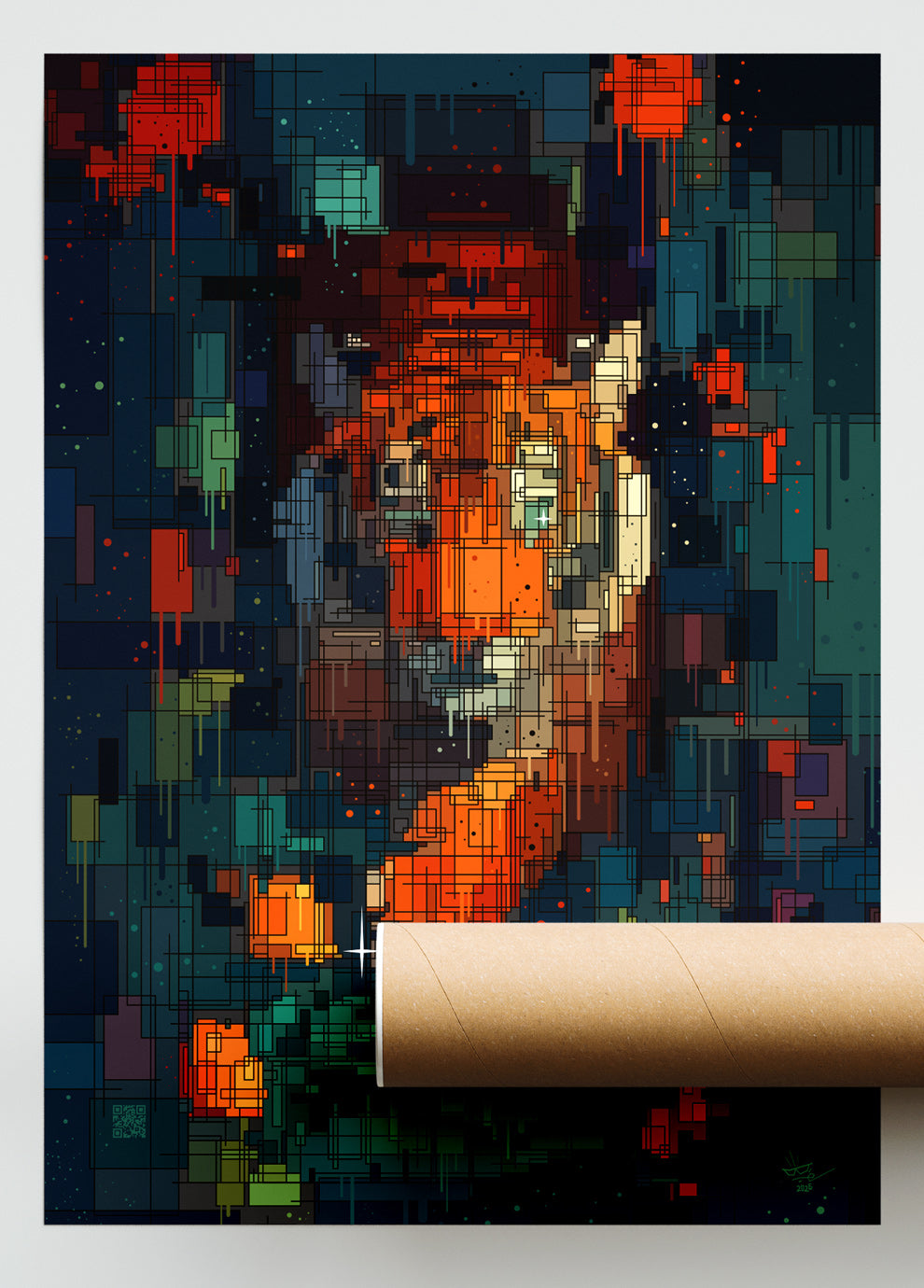
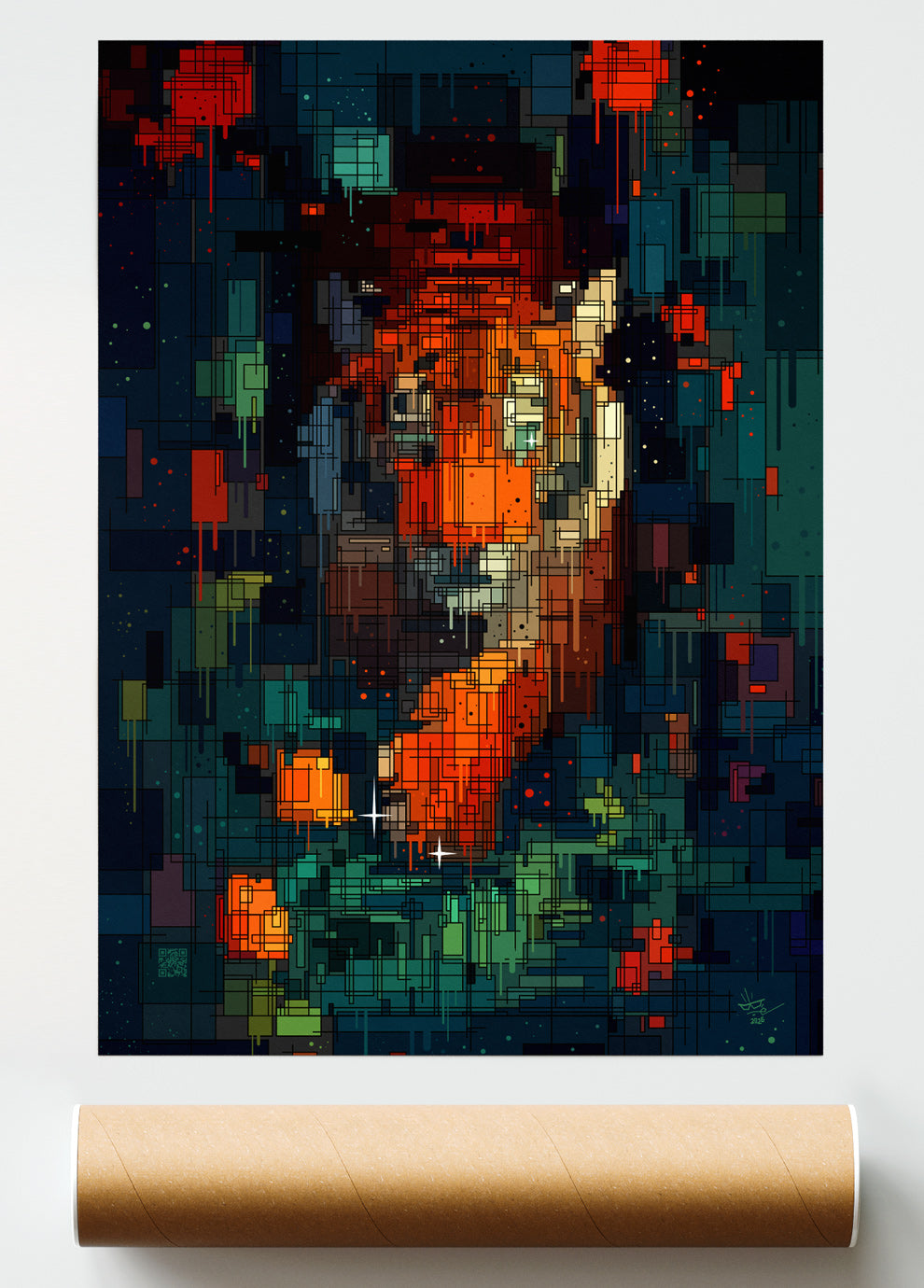
The visuals illustrating this article present different stages in the creation of one of my recent works: Snow White - Love's First Kiss.
From the initial sketch on a tablet to the vector construction, and then to the final coloring on a workstation, this series of images shows how a digital artwork is gradually built, using a process that is ultimately not so different from that of traditional techniques.
The finished illustration is now available as a Fine Art poster printed on premium paper.
→ Discover the Snow White - Love's First Kiss poster